
The sky cracked open with a roar. A jagged streak of lightning split all that got in its way. An inch away from being struck, a weary crow spiralled downwards, losing sense of its frail claws, and accidentally dropped me – or what would soon become me – in the middle of nowhere. The conditions were certainly not in my favour; after all, the chances of an insignificant seed, covered by the dust of passed time, surviving in such an unforgiving and hostile environment were close to none. I am not sure whether it was luck or one of the tricks up Mother Nature’s sleeve, but the water seeped just low enough for me to have a chance of survival.
A fortnight later, my shoot broke through the desiccated soil, one inch at a time. Contrary to what I had initially thought, my challenges were far from over – they had only just begun. My mornings would start with reckless vehicles and hurried people, missing me by just a step; afternoons were filled with the blaring rays of the sun; evenings were marked by my tender leaves being trampled by a bunch of six-year-olds out to play; and finally, the nights, which were rather peaceful, with the moon gleaming at my mere existence. In a world bursting with motion, I was the pause no one cared to notice.
The same cycle of events continued for what felt like an eternity – until the odds were no longer in my favour. I found myself dry and shrivelled up, my supple leaves now yellow, my stalk drooping towards the ground. I was sure that this was the end. Through my diminishing senses, I noticed a hunched figure moving towards me in a rather odd fashion. Upon closer inspection, I recognised the figure: it was Ravi, the man living in the slum directly adjacent to where my feeble body now lay. Ravi was covered in dirt and sweat; from what I recollected, he was a small factory worker trying to support a family of six. In a way, I could understand his struggles – although, of course, I had no family to call my own. To my surprise, this man stopped to notice me, and, to further the shock, he smiled when he saw me before calling his wife, Usha, out to see what he had found. Truth be told, I was terrified by this interaction. Apparently, I was a Bodhi tree sapling – a symbol of enlightenment and the fulfilment of desires. Ravi and Usha doted on me as if I were their own child. Seeing how parched I was, they quickly brought me some water, which I took no time to absorb. I felt alive again – and, more importantly, I had made new friends.
Our routine started with Usha waking up at five a.m., with a meagre four hours of sleep. As she made her way around the house cleaning up after everyone and cooking their meals, I could often hear her in-laws’ harsh taunts through the thin walls. Ravi would wake up a bit later, and they would both get dressed to leave for work. On her way out, Usha would offer me a refreshing drink of water and open up about her worries. She worked as a seamstress for a corrupt employer and was struggling to pay for her children’s school tuition. My inability to offer help frustrated me every day, but at least I could feel her rage as my own. Later in the evening, an exhausted Ravi would return home and nestle a little diya – an oil lamp – by my roots while narrating his day, followed by prayers for his family’s wellbeing. I could not speak, for I had no mouth, but I loved being part of this family’s routine regardless.
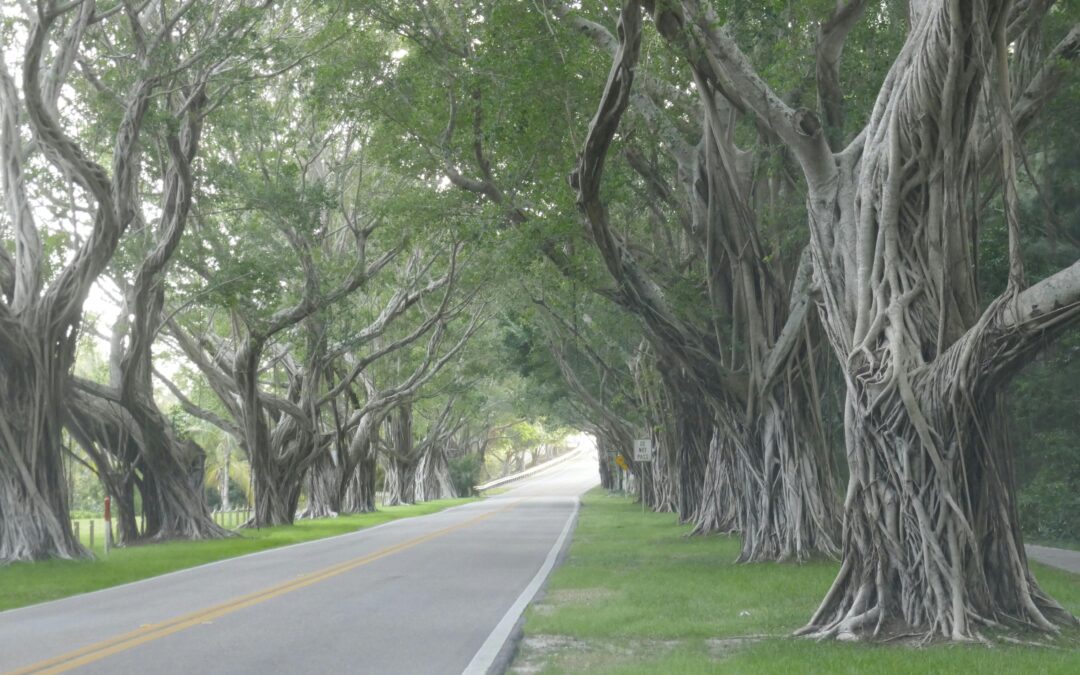
Over the following five years, Ravi and Usha made meticulous efforts to care for me. Their unwavering determination led to me growing into a mighty tree; my branches sprawled across the sky, bearing lush green leaves. Now, other people noticed me too; in fact, all the members of the community visited me to tell me about their hardships and prayers. They would also adorn me with saffron threads – each thread encasing a unique story and person. I was visited by people of all age groups – from wise old women who came to pray for the health and prosperity of their loved ones to children who came to play in the soothing shade of my canopy. I was now a part of this community, and I could not have been more grateful.
As the years passed, my branches sprawled further and further into the horizon. My visitors were no longer limited to people; I had families of baboons leaping from branch to branch, crows cawing in unison, and songbirds filling the dull afternoons with their chittering. They all lived in my abode. There were also smaller plants and vines thriving in my shade. It felt surreal to have an entire ecosystem revolving around me.
Just when things felt perfect, tragedy struck: the city had a major flood. All that I ever knew disappeared with each ruthless gush of water – leaves flying away, threads loosening from my trunk, and vehicles drowning in the periphery. I dug my roots as deep as I could and tried my best to keep my branches stiff through the vengeful storm; after all, the baboons and the songbirds were not going to protect themselves. My survival was nature’s own marvel. Then, I saw a crow fall to the ground – lifeless eyes and tattered wings. It dawned upon me that they were all gone: Ravi and Usha, the children, the other plants and the animals. I was on my own now – no melodic calls of the songbirds, no diyas by my base. I was ready to accept my fate with withdrawal, as such was the way of Mother Nature. That was when I saw a hunched figure making its way towards me once again. This time, it was followed by another, less hunched figure: Ravi and Usha were back! For a second, I was able to forget about the trauma and suffering. It all came back to me when I realised that the slums they resided in were in shambles. They would have to start over – and I would be with them every step of the way.
Monsoon turned into winter, and winter into spring. Soon, the afternoons were once again filled with the chittering of songbirds, and the evenings with the playful laughs of children. I caught myself gleaming at the sight of diyas again. Ravi was able to rebuild an even better house, and soon, the vines, the bougainvillea, and the neem all grew back – leaf by leaf, twig by twig.
It was a May morning when the machines came – the kind that arrive too quietly, with sunlight that feels out of place. Word had spread – something about structural risk, a survey report, my branches reaching too far. I had always known this moment might come.
What I hadn’t expected, however, was the crowd. Ravi and Usha stood at the front, their hands resting lightly on my trunk. Children gathered beside them – some now teenagers, others too young to remember the flood. People from the slums, from across the road, from farther than I thought they’d come. They didn’t shout or hold signs. They simply stood. Not in protest, but in memory. In belonging.
The workers hesitated. Phones rang. Someone made a call. I felt the delay ripple through the crowd like wind through my leaves. For now, I was still here. And somehow, that was enough.
By this point in my life, I had been given one chance after another at being alive – the second I thought the end was here, I was proven wrong. I suppose I will stick around for a while longer. As for Ravi and Usha, the decades of perseverance and optimism paid off; they now live in a cosy apartment with fulfilling jobs. Ravi is a wildlife conservation agent, and Usha a boutique owner. Still, I find a hunched figure walking towards me – diya in hand – every Saturday, without exception.
I think the greatest joy in life is the stories and prayers I have heard – parents wishing for a child, students hoping to pass exams, or even children praying that their mothers never find out about the broken vase. Most importantly, I am constantly in awe of the value held by the decades’ worth of saffron threads that my trunk continues to outgrow.